

Acrylic
See also: Construction of a statuette | Gallery of acrylic figurines.
Acrylic, often referred to as acrylic glass, is the plastic equivalent of glass. From a distance, it looks similar, but because it is a plastic material, it is more flexible. It can be easily cut with a laser, bent, and elements can be embedded within it. These properties make it indispensable in projects that are not possible to execute with glass.
At GLASSO, we use two basic versions of acrylic:
a) Acrylic sheets
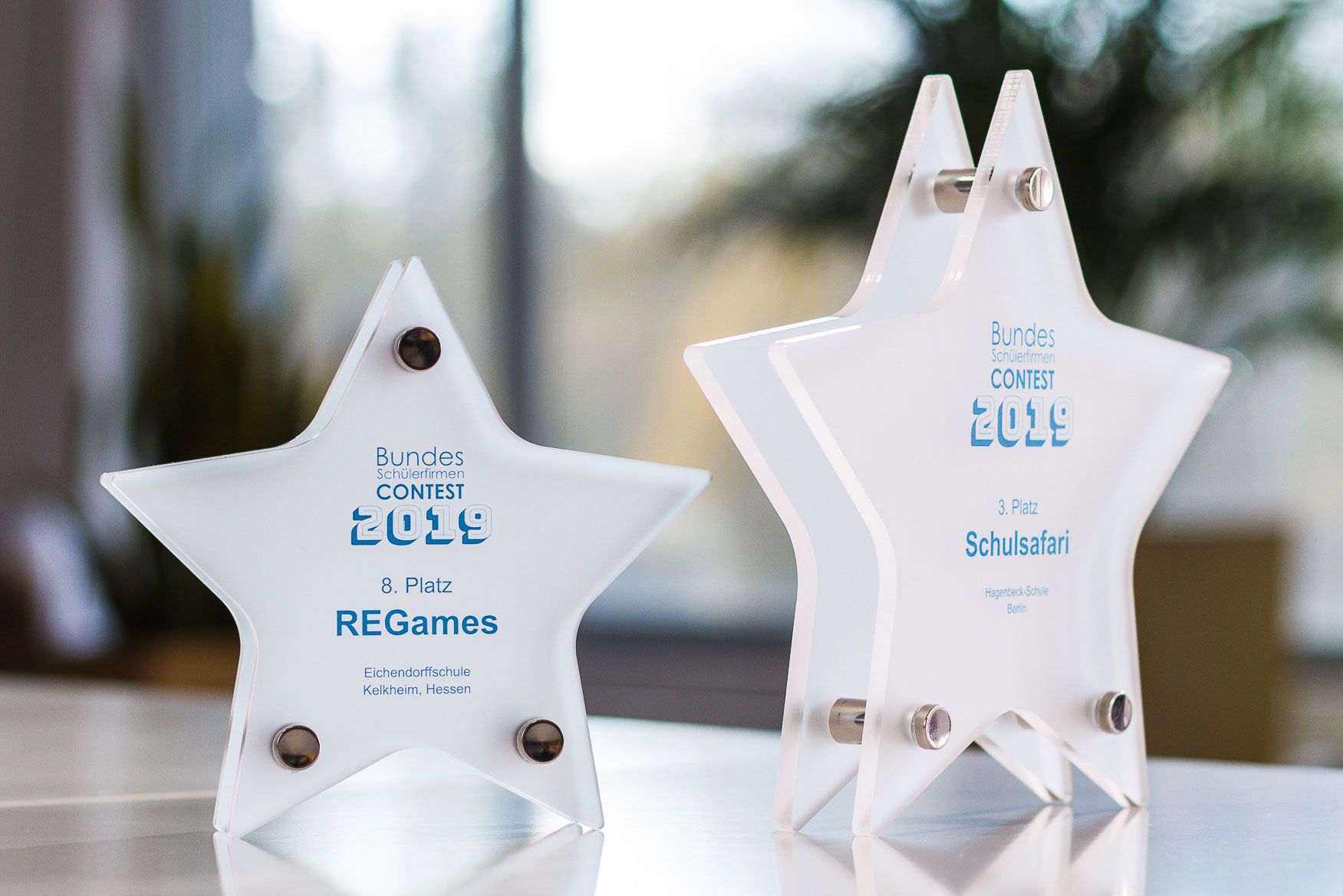
Commonly referred to as Plexiglas or Perspex. It is a PMMA material and is available in sheets of various thicknesses. These are obtained by pouring or extruding acrylic to the required thickness.
The material is characterized by high transparency and easy processing. It is also a material that is half the weight of glass.
Acrylic glass can be transparent or colored (solid or translucent). The most commonly used by us is satin acrylic. This is a transparent material that has been matte on both sides. Thanks to this treatment, a frosted glass effect has been achieved.
In our projects, we usually use acrylic with a thickness ranging from 3 to 15mm. We create full-fledged figurines out of it, or use it as additional decorative elements for figurines.
Thanks to the possibility of cutting acrylic with a CO2 laser, we can create virtually any shape of an element or figurine. The edge of the cut plexiglass is smooth and aesthetic, requiring no additional processing.
The perfect technology for personalizing acrylic is UV printing. Complex shapes and multicolored graphic designs allow for the creation of elegant and interesting figurines, even from something as simple as acrylic.
An additional technique that can be used with acrylic is bending. By using specialized equipment to heat the bending edges, we can easily obtain a bend at any angle. In this way, we produce, among other things, budget single-element figurines, where the base and the element are a single whole.
Acrylic glass works very well as an additional element added to a glass figurine, which adds to its shape, color, and - by increasing the number of elements - adds depth. The plexiglass can be attached to the glass directly using glue or with spacer bolts, which are usually glued to the glass and screwed to the plexiglass. This allows for the possibility of replacing the acrylic element if needed.
b) Acrylic casting (embedding elements)
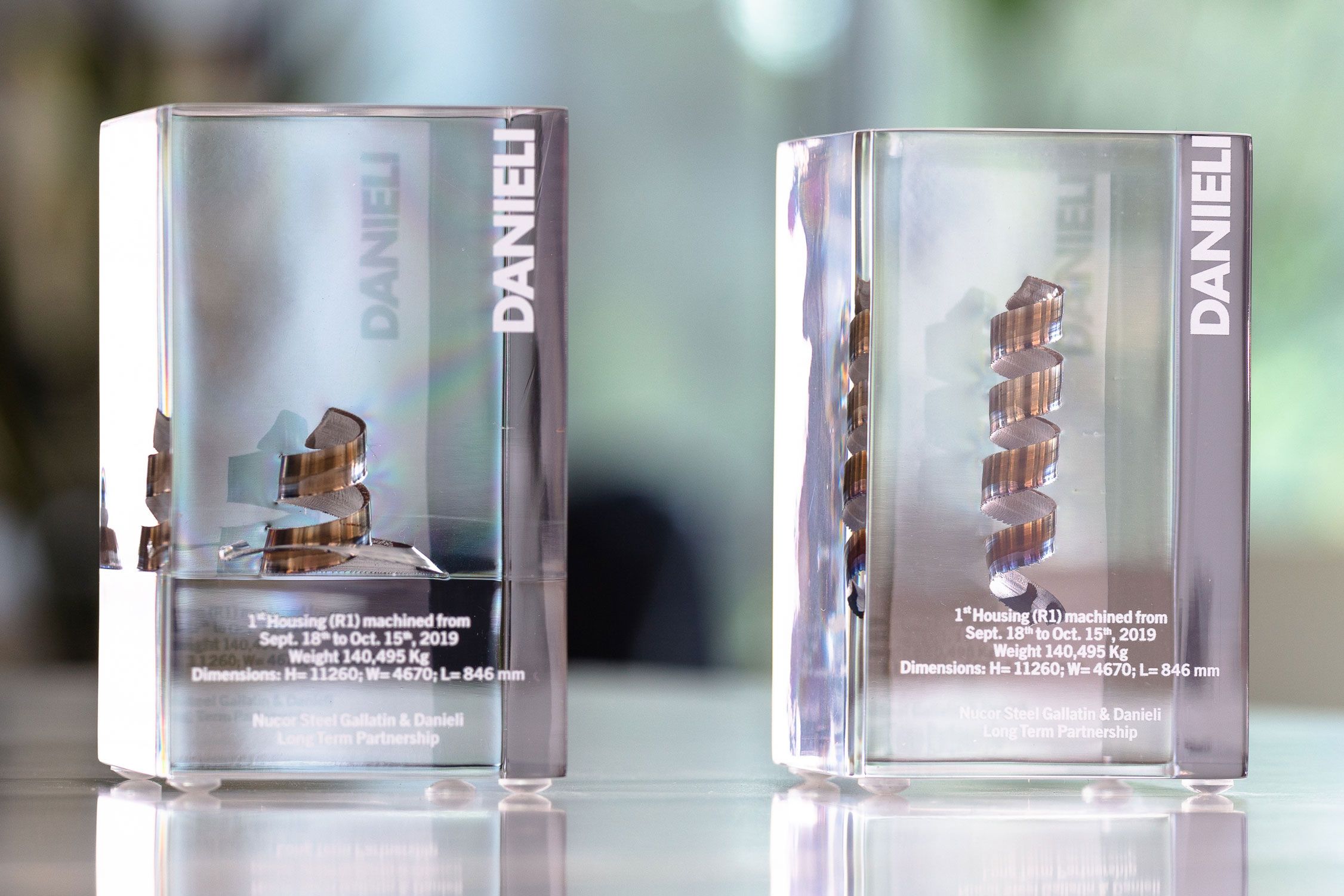
Acrylic as a material can also be used to create three-dimensional objects, and therefore spatial statues.
Creating acrylic figurines mainly involves molding the appropriate shape, or cutting it out using a saw from a larger piece. The figurine is then ground and polished to achieve a transparent and smooth surface.
The most interesting option that acrylic casting gives us is the physical embedding of real objects inside the statuette. The relatively low melting temperature of the material allows other things to be poured into the mold during the filling process. Also, since acrylic does not need to be heated to high temperatures, the embedded object is not exposed to a lot of heat.
In our projects, you can find embedded elements made of various materials, including metals, stones, or glass, but also from plastics and even properly prepared organic materials.